
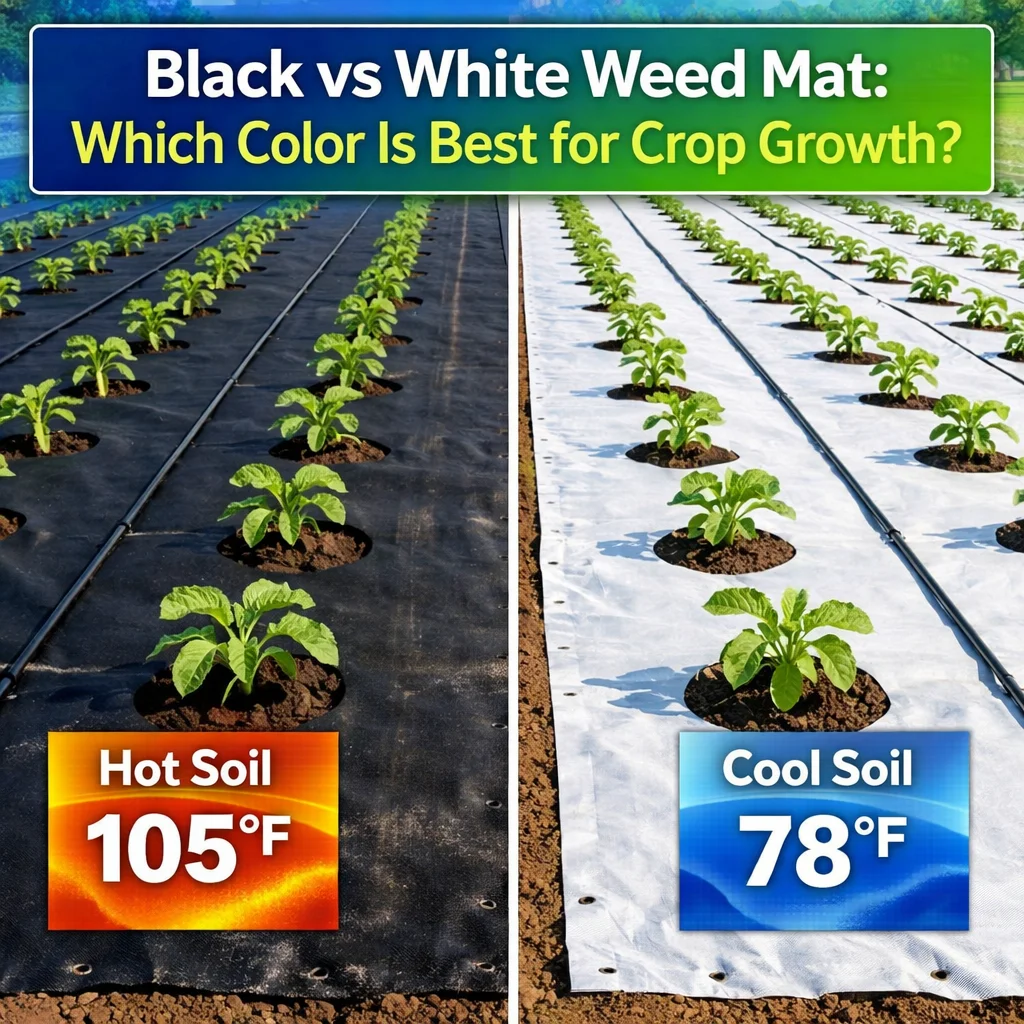
Black vs White Weed Mat: Which Color Is Best for Crop Growth?
1. Introduction
Modern farming practices are increasingly focused on improving productivity while reducing labor, chemical usage, and environmental impact. One of the most effective solutions used by farmers today is the weed mat, also known as weed control fabric. Weed mats help suppress unwanted plant growth, protect soil health, and create better conditions for crops to grow efficiently.
In agricultural fields, weeds compete directly with crops for nutrients, sunlight, water, and space. If weeds are not controlled properly, they can significantly reduce crop yield and increase labor costs. This is why farmers across the world are adopting Weed Mat for Agriculture as a reliable and sustainable weed control solution.
Weed mats are available in different colors, but the two most common options used in farming are black weed mats and white weed mats. Each color has its own characteristics that influence how the fabric interacts with sunlight, soil temperature, and crop growth conditions.
Understanding the difference between these two options is important when selecting the right solution for farms, orchards, vegetable cultivation, and nursery operations. In this guide, we will explore Black vs White Weed Mat and help determine which color is best for crop growth depending on farming conditions and crop requirements.
2. What Is a Weed Mat?
A weed mat is a specially designed ground cover fabric used in agriculture, landscaping, and horticulture to control unwanted weed growth. It is typically manufactured using UV-stabilized HDPE woven fabric, which makes it strong, durable, and suitable for long-term outdoor use.
The primary function of this material is to create a protective barrier on the soil surface. This barrier prevents sunlight from reaching weed seeds in the soil, stopping them from germinating and spreading across the farm.
A high-quality product produced by a reliable weed mat manufacturer offers several important advantages for farmers and growers.
Basic functions include:
- Preventing weed growth by blocking sunlight
- Allowing air and water to pass through the fabric
- Maintaining soil moisture for crops
- Reducing manual labor and herbicide use
- Protecting soil structure and fertility
Today, these fabrics are widely used in vegetable farms, fruit plantations, orchards, and horticulture operations. Many growers source these products from a trusted weed mat manufacturer from India because of their durability, UV resistance, and cost-effective performance in agricultural environments.
3. Why Weed Mat Color Matters in Farming
Many farmers assume that all weed mats function the same way regardless of color. However, the color of the fabric can significantly influence the farm environment.
Different colors interact differently with sunlight and heat, which can affect soil temperature and plant growth conditions.
The main factors influenced by color include:
- Light absorption
- Heat retention
- Soil temperature regulation
- Reflection of sunlight toward plants
For example, darker materials tend to absorb more heat, which may increase soil temperature. On the other hand, lighter surfaces reflect sunlight, which may help keep the soil cooler.
These differences can influence crop performance depending on the climate and crop type. Farmers growing crops in cooler climates may benefit from slightly warmer soil conditions, while those in hot regions may prefer materials that reflect sunlight and reduce heat buildup.
Therefore, choosing between black and white weed mats is not just about appearance—it directly affects crop growth, soil health, and overall farm efficiency.
4. Black Weed Mat: Features and Benefits
Black weed mats are the most widely used type in agriculture because they provide strong weed suppression and stable growing conditions for many crops.
Key Features
Black mats absorb sunlight and heat effectively. This characteristic allows them to warm the soil slightly while blocking sunlight completely from reaching weed seeds beneath the surface.
The dark color also provides excellent coverage, preventing weeds from growing through the fabric.
Benefits
- Strong weed suppression due to complete sunlight blockage
- Improved soil warmth in cooler climates
- Long-lasting durability under sunlight exposure
- Reduced weed competition for nutrients and water
Best Crops for Black Weed Mats
Black mats are highly effective for warm-season crops and fruit plantations that benefit from slightly warmer soil conditions.
- Tomatoes – Maintain warm soil temperatures and support better fruit development.
- Chillies and Capsicum – Encourage flowering and fruit setting.
- Cucumbers and Gourds – Maintain stable moisture levels around roots.
- Eggplant (Brinjal) – Helps develop stronger root systems.
- Melons and Watermelons – Improve fruit quality and reduce soil contact.
- Fruit Orchards – Mango, citrus, pomegranate, guava, papaya, and coconut plantations benefit from reduced weed competition.
Because of these advantages, black coverings are widely used in Weed Mat for Vegetables cultivation as well as Weed Mat for Orchards farm environments where long-term weed management is required.
5. White Weed Mat: Features and Benefits
White weed mats offer different characteristics compared to darker materials. Instead of absorbing heat, white surfaces reflect sunlight.
This reflective property helps regulate temperature in agricultural environments where excessive heat may stress crops or damage soil moisture levels.
Key Features
White mats are designed to reflect sunlight rather than absorb it. This helps reduce heat buildup on the soil surface and maintain more balanced temperatures.
They also allow good air circulation and water permeability, which supports healthy soil conditions.
Benefits
- Reflect sunlight and reduce heat absorption
- Help maintain cooler soil temperatures
- Improve light reflection around plant areas
- Support balanced crop growth in hot regions
Best Crops for White Weed Mats
- Lettuce – Prevents bolting and protects leaf quality.
- Spinach – Maintains moderate soil temperature.
- Cabbage and Cauliflower – Support proper head formation.
- Broccoli – Helps maintain balanced root temperatures.
- Strawberries – Improve fruit quality and reduce heat stress.
- Herbs and Nursery Plants – Basil, coriander, parsley, and mint benefit from cooler soil conditions.
Because of these characteristics, reflective materials are commonly used as Weed Mat for Nursery plant cultivation, greenhouse production, and areas with intense sunlight.
6. Black vs White Weed Mat: Comparison Table
| Feature | Black Weed Mat | White Weed Mat |
|---|---|---|
| Heat absorption | High | Low |
| Light reflection | Low | High |
| Soil temperature | Warmer | Cooler |
| Weed suppression | Excellent | Very good |
| Best climate | Cooler regions | Hot regions |
| Common use | Farms, orchards | Nurseries, greenhouses |
7. Which Weed Mat Is Best for Crop Growth?
There is no single answer that applies to every farming situation. The best color depends on several environmental and agricultural factors.
- Climate conditions in the farming region
- Type of crop being grown
- Soil temperature requirements
- Irrigation and farm management practices
For example, black mats are often preferred for general farming because they provide stronger weed suppression and stable soil conditions for many crops.
On the other hand, white mats may be more suitable for farms located in extremely hot climates or for specialized horticulture operations where temperature control and light reflection are important.
8. Factors to Consider When Choosing Weed Mat Color
- Climate and temperature – Hot climates may benefit from reflective materials, while cooler climates may benefit from heat-absorbing surfaces.
- Crop type – Different crops respond differently to soil temperature changes.
- Soil conditions – Moisture retention and soil structure can influence which mat performs better.
- Irrigation system – Drip irrigation systems require fabrics with good permeability.
- Farm location – Sunlight intensity varies depending on geographic location.
9. Applications in Agriculture
- Vegetable crop production
- Fruit orchards and plantations
- Coconut and plantation farming
- Nursery plant production and horticulture
- Landscaping and greenhouse farming
In these applications, the material helps maintain soil moisture, reduce weed competition, and create cleaner growing conditions for crops.
10. Conclusion
Both black and white weed mats provide effective solutions for weed control in modern farming systems. They help reduce herbicide use, lower labor costs, and improve soil health while supporting better crop growth.
Black mats are widely used for general agricultural applications because they offer strong weed suppression and reliable performance across many crops.
White mats are useful in specialized situations where heat reflection and temperature control are required, particularly in nursery or greenhouse environments.
Ultimately, the best choice depends on farm conditions, crop requirements, and climate. Working with a trusted supplier ensures farmers receive high-quality products designed to improve agricultural productivity and long-term farm sustainability.
11. FAQ Section
Which weed mat color is better for farming?
Both options are effective for weed control. Black mats are commonly used for general farming because they absorb heat and maintain warmer soil conditions, while white mats reflect sunlight and keep soil cooler in hot regions.
Does weed mat color affect plant growth?
Yes, the color can influence soil temperature and sunlight reflection, which may impact the crop growth environment.
Which crops grow best with black weed mats?
Black mats are ideal for warm-season crops such as tomatoes, chillies, capsicum, cucumbers, brinjal, watermelon, muskmelon, and pumpkins. They are also widely used in fruit plantations like mango, pomegranate, citrus, and guava.
Which crops are suitable for white weed mats?
White mats are better suited for crops sensitive to excessive heat, including lettuce, spinach, cabbage, broccoli, cauliflower, strawberries, and many herbs.
Can water pass through weed mats?
Yes, high-quality woven fabrics allow water, air, and nutrients to pass through while preventing weed growth underneath.